
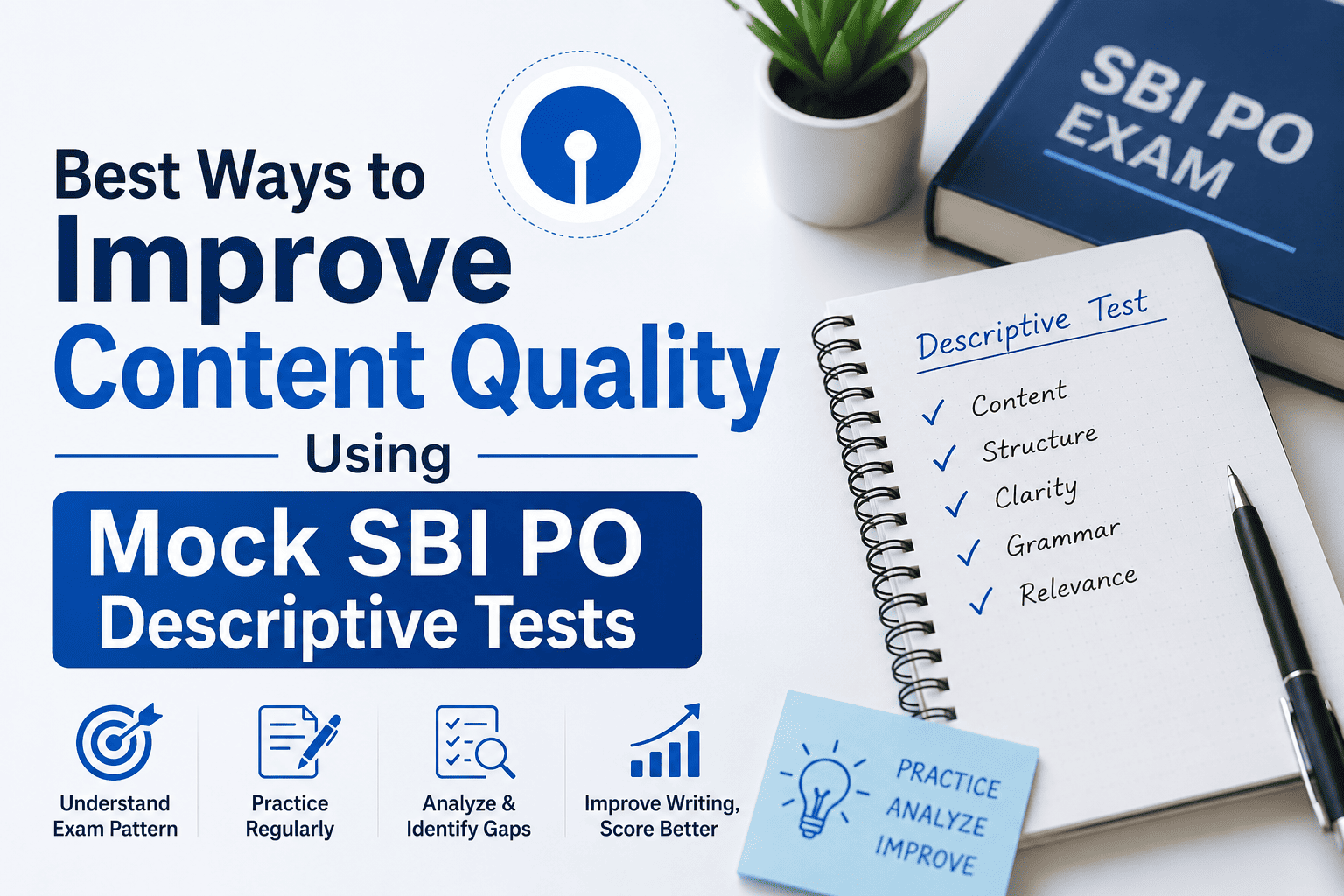
For any candidate aiming to clear the SBI PO exam, the descriptive writing section often feels like a hidden trap. Many aspirants focus heavily on objective questions, while the real differentiator lies in essay and letter writing. Mock descriptive tests serve as a mirror that reflects both strengths and weaknesses in content creation. These practice papers push a writer to think under pressure and produce structured responses within a short time. This article explains how to use those mock tests as a tool for sharpening your writing skills. With consistent practice, anyone can turn average content into excellent material for the exam hall.
Start with Real Exam Conditions
The first rule of using mock descriptive tests is to sit for them exactly like the real exam. That means no phone, no extra time, and no dictionary for checking spellings. A timer should run from the time you begin the SBI PO descriptive test until the final minute. This approach forces the brain to recall facts quickly and arrange sentences without hesitation. After finishing the mock, the candidate must review each answer with a red pen. The goal is to spot places where logic jumps, or grammar fails. Repeated practice under real conditions trains the mind to produce clean content even when nervous.
Spot Repeated Errors Through Comparison
One mock SBI PO descriptive test alone cannot reveal deep patterns of mistakes. A serious aspirant should write at least five descriptive mocks before analyzing content quality. After each test, the writer should compare answers against a model solution or a mentor’s feedback. Common errors like repetitive sentence openings or weak conclusions become visible across multiple papers. For instance, a person might start every paragraph with “Firstly” or forget to add examples in essays. Once these patterns appear, the candidate can list them on a small note. That note then becomes a checklist for the next mock attempt. Over time, the list shrinks, and the writing becomes cleaner.
Build a Bank of Strong Opening Lines
Weak introductions often ruin otherwise good answers in descriptive exams. Mock tests give the perfect chance to experiment with different ways to start an essay or a letter. A candidate might try a question, a fact, or a bold statement as the opening line. After writing five different mocks, patterns of what works well become clear. The writer can then save those successful opening lines in a separate notebook. Later, these lines can be adapted for different topics like banking, the economy, or social issues.
Use Timed Rewriting for Flawless Structure
Writing an answer once is never enough to reach top quality. After completing a mock test and getting feedback, the next step is to rewrite the same answer without looking at the first draft. This time, the focus should be on paragraph breaks, transition words, and logical order. Transition words like “therefore,” “however,” and “for example” should appear naturally between sentences. The candidate must also check whether each paragraph carries one clear idea and no extra clutter. Timed rewriting usually takes half the time of the original attempt.
Sharpen Vocabulary Without Overcomplication
Many aspirants believe that long words make content look smart. Mock descriptive tests reveal the truth: simple and precise language always wins. A candidate should circle any word in a mock answer that feels vague or overused. For example, replacing “good” with “effective” or “bad” with “damaging” adds clarity. After each test, the writer can add five new words to a personal vocabulary list. However, the real trick is to use those words in the very next mock without forcing them.
A mock SBI PO descriptive test is more than just practice papers. Each mock reveals a new layer of improvement, from grammar to structure to time use. Any aspirant who follows these steps will enter the exam hall with confidence and clean, readable answers.